Compare pick depth, edge angle, grip, and stroke direction to reduce avoidable scraping while keeping a clear attack and useful dynamic range.
Symptom checklist
- pick sounds scratchy
- guitar pick attack is harsh
- wound strings sound raspy
- upstrokes make a scraping sound
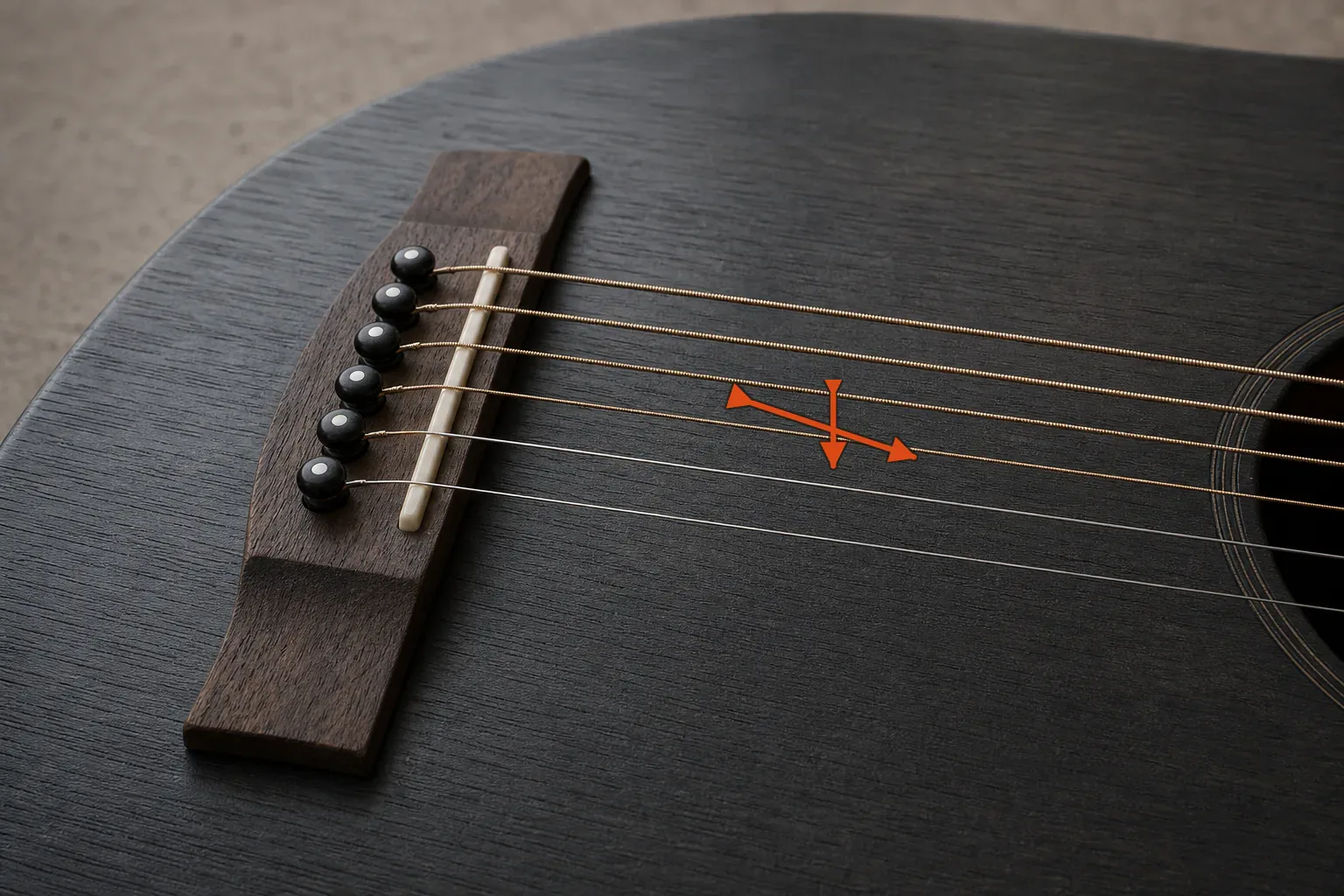
Symptoms
The correct note sounds, but a scrape, click, or brittle edge appears before or during the pitch. The issue is the texture of pick-to-string contact rather than a missed string.
- Wound strings sound much raspier than plain strings.
- One pick direction scrapes more than the other.
- Playing louder or faster makes the attack harsher.
- The pick feels as if it drags before releasing the string.
- Gripping harder increases the click.
Some pick sound is normal and can be musically useful. The goal is a repeatable attack that suits the tone, not a completely silent pick.
Causes
Too much pick enters the string
A deep stroke makes the string travel farther across the pick surface before release. It also creates more resistance, which can produce scrape and make the hand tense.
The edge angle is excessive or inconsistent
A modest angle can help the pick pass through. Too much angle can make its edge travel along the string, especially across windings.
The grip cannot yield at impact
A rigid thumb and index finger turn each stroke into a hard collision. A grip can remain secure without an emergency squeeze at every attack.
The two stroke directions use different paths
The wrist may roll, the pick may enter deeper, or the edge angle may change on one direction. Correct string choice can hide this tonal imbalance.
Volume comes only from digging harder
If a strong dynamic means pushing the pick far through the string, harshness rises faster than useful volume.
Diagnosis
Compare plain and wound strings
Play one note on each at the same perceived volume. A large increase in rasp on the wound string points toward pick angle, depth, or surface contact.
Use the shallow-tip test
Expose less pick tip and make a stroke that just clears the string. If the scrape drops while the note remains full, depth is a primary cause.
Map edge angle
Start with the pick face nearly parallel to the string, then add angle in small steps. Listen for the point where easier release becomes excessive scrape.
Compare grip pressure
Hold the pick securely enough not to drop it, then release unnecessary squeeze. If the click softens without pick instability, the previous grip was too rigid.
Isolate each direction
Record four downstrokes and four upstrokes on the same note. Compare depth, angle, volume, and tone before changing the full alternate-picking motion.
Fixes
Reduce depth first
Use only enough exposed tip to contact and clear the string. Practise short bursts and stop when the old digging motion returns.
Choose a moderate edge angle
Find an angle that releases smoothly without a long wipe across the string. Keep it similar in both directions unless the musical effect is intentional.
Keep the grip secure but responsive
Use the least pressure that maintains pick control. If the pick rotates, diagnose pick slipping rather than solving it with a constant clamp.
Match stroke paths
Practise the harsher direction alone with the successful direction as a reference. Compare entry depth and wrist rotation, not just tempo.
Build dynamics without burying the pick
Practise quiet, medium, and strong notes using controlled motion size. If the strong attack becomes scratchy, return to medium and increase gradually.
Mistakes
- Trying to remove all audible pick attack.
- Changing pick material before checking depth, angle, grip, and direction.
- Practising only through heavy gain that obscures the contact sound.
- Softening the attack until timing and note definition disappear.
- Correcting downstrokes and assuming upstrokes will match automatically.
Progress
Record the same phrase at quiet, medium, and strong dynamics on a clean sound. Progress means the attack texture stays controlled as volume changes, both directions sound related, and the hand no longer needs extra grip to keep the pick moving smoothly.