Diagnose buzzing or dead fretted notes by checking fret-side placement, fingertip contact, excess pressure, timing, and possible guitar setup faults.
Symptom checklist
- fretted notes buzz or die even when you press hard
- guitar note buzzes when fretted
- fretted note sounds dead
- one fret or string keeps choking
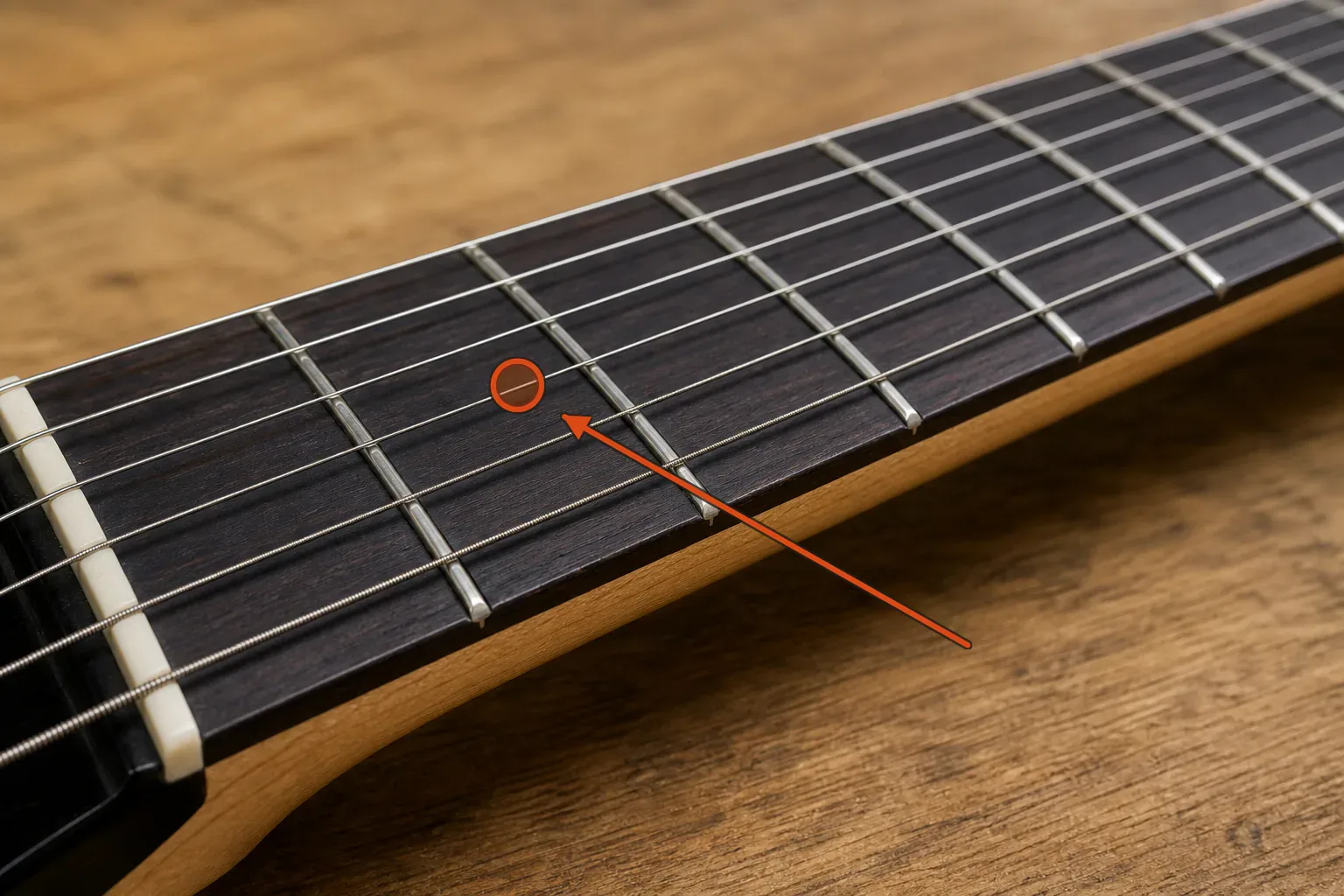
Symptoms
If fretted notes buzz, choke, or disappear even though you feel like you are pressing firmly, the fix is usually not more force. Dead fretted notes usually come from fret-side placement, finger angle, excess tension, or a shape that makes one note lose contact while another finger moves.
Use this diagnosis when single notes or chord tones sound unreliable after your finger is already on the string. If the wider problem is pain or full barre-chord collapse, start with barre chord pain and collapse instead.
- A note buzzes even though the finger feels like it is pressing hard.
- One string in a chord dies while the surrounding notes sound clear.
- The note works in isolation but fails inside a chord shape or riff.
- You squeeze harder and the sound barely improves.
- Your fingertip rolls, flattens, or touches a neighbouring string by accident.
This matters because buzzing and dead notes can make a player chase strength when the real issue is contact quality.
Example: if the same note cleans up as soon as the finger moves closer to the fret, the problem was placement and leverage, not a weak hand.
Causes
1. The finger is too far behind the fret
A note needs clean contact against the fret. If the finger sits too far back in the fret space, the string can buzz even when the hand is working hard.
2. The fingertip is not landing cleanly
A collapsed fingertip, flat angle, or rolling joint can reduce pressure on the target string while also touching a nearby string.
3. Another finger is pulling the note out of position
Inside chord shapes, one finger can drag the hand enough that a different note loses its clean contact point.
4. You are adding tension instead of improving leverage
More squeeze can make the fingertip less adjustable. The note may still buzz because the force is not aimed where the string needs it.
5. The fretting task is changing faster than the contact can reset
In riffs or chord changes, a finger may arrive near the right fret but never fully settles before the string is picked or strummed.
A local fret or setup issue is interfering
Technique usually affects several notes or changes when you alter finger placement and pressure. A note that still buzzes or dies on the same string and fret after those checks may point to fret condition, string condition, action, neck relief, or another setup issue.
Diagnosis
Run these checks before adding more pressure. The goal is to find whether the failure is placement, angle, interference, or timing.
Check 1: Move the finger closer to the fret
Play the same note while gradually moving the finger nearer to the fret wire. If the buzz improves quickly, placement is the main issue.
Check 2: Play the note alone, then inside the shape
If the note is clean alone but dies inside the chord or riff, another finger or the wider shape is disturbing it.
Check 3: Reduce pressure slightly and listen again
If the note stays almost as clear with less force, you were probably over-squeezing without solving the contact problem.
Check 4: Watch whether the fingertip rolls after it lands
If the note starts clean and then dies, the fingertip may be shifting as the hand settles into the rest of the shape.
Check 5: Pick the note earlier and later in the movement
If the note only buzzes when you play at tempo, your finger may be arriving before it has stable contact.
Check 6: Map the problem across strings and frets
Play the same note shape on nearby strings and frets with clean placement and moderate pressure. If the fault remains tied to one string or fret while surrounding notes ring cleanly, stop increasing pressure. Check the string for damage, then ask a qualified repairer to assess the guitar if the pattern persists.
Fixes
If the finger is too far behind the fret
- Place the fingertip close enough to the fret that the note speaks without extra squeeze.
- Use slow reps where the placement is correct before the string is picked.
- Do not judge the rep by effort; judge it by clear sound with moderate pressure.
If the fingertip angle is poor
- Adjust the finger so the target string has a clean contact point.
- Check whether the fingertip is muting a neighbouring string unintentionally.
- Use smaller hand movements instead of flattening the whole finger by default.
If another finger is disturbing the note
- Build the shape one finger at a time and listen for the exact moment the note dies.
- Keep the successful finger still while adding the next finger slowly.
- If one finger keeps dragging the shape, check finger independence problems.
If tension is making the note worse
- Lighten the thumb and fretting hand before retrying the note.
- Find the smallest pressure that makes the note speak.
- If the whole hand clamps early, use the checks in left-hand tension while fretting.
If the contact is late at tempo
- Practice landing the fretting finger before picking the note.
- Slow the phrase until contact and pick attack happen in the right order.
- If both hands stop lining up, compare this with hand synchronization problems.
If the fault remains string-specific or fret-specific
- Replace a visibly damaged or badly worn string before judging the setup.
- Record which frets and strings fail so a repairer has a repeatable symptom to inspect.
- Do not attempt fret levelling, truss-rod adjustment, or major action changes unless you understand the procedure and its risks.
Mistakes
- Pressing harder before checking fret-side placement.
- Practising a chord shape without finding which exact note is dying.
- Letting one successful finger move while adding the next finger.
- Ignoring the thumb when extra pressure spreads through the whole hand.
- Assuming every buzz is the same problem in every fretboard position.
Progress
Cleaner fretted notes usually feel more precise, not more forceful. The note speaks with less squeeze. The fingertip stays put after it lands. Inside chords, you can identify which finger is causing the failure instead of treating the whole shape as broken.
A useful benchmark is five clean repetitions of the problem note alone and five inside its original phrase or chord. If it still fails only at one fixed string and fret after those technique checks, record the location and treat it as a possible instrument issue.